
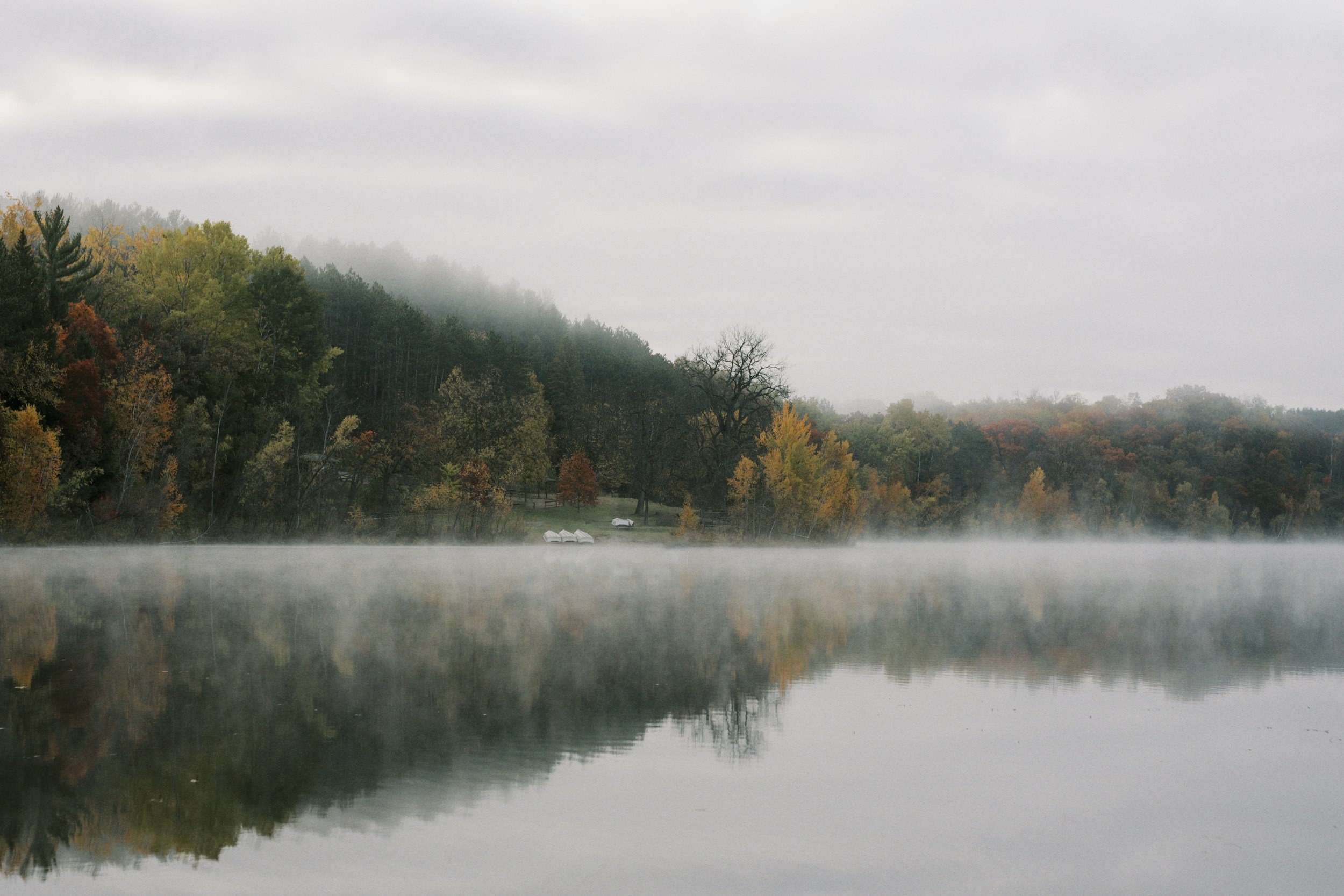
Alban Elfed | Autumn Equinox
Music for balance, harvest, changing light and letting go.
A note before listening (17 tracks, 1hr 36mins)
This isn't a collection of my favourite autumn pieces, but a musical meditation on the Autumn Equinox. Some of the music may feel familiar and comforting; some may be less immediately easy on the ear. I've included both deliberately. As we know, the turning of the year isn't only about beauty and abundance, but also about change, uncertainty, fading light and letting go.
So if a piece challenges you, perhaps stay with it for a little while, or return to it another time. There can be beauty in the unfamiliar too, and a short listening note for each track is provided below to guide you through unexpected sounds and textures, should you need it.
1. Dario Marianelli – Dawn from Pride & Prejudice (2005); Jean-Yves Thibaudet
Listen for the repeated piano figure, gently shifting beneath the melody. Music that seems to hover between stillness and movement, much as the year pauses at the point of balance.
2. Richard Strauss – Four Last Songs: September; Elisabeth Schwarzkopf
Listen for the warmth of the horn towards the end of the song, and throughout for the long, floating vocal lines. There is both beauty and melancholy here as summer is fading, but the world has not yet surrendered to winter.
3. Amy Beach – Four Sketches, Op. 15: No. 1, In Autumn; Eunjung Choi
Listen for the delicate, almost impressionistic colours of the piano. This autumn is not the drama of falling leaves, but their changing colours, textures and light.
4. Einojuhani Rautavaara – Autumn Gardens: I. Poetico; Helsinki Philharmonic Orchestra
Listen for the way the music seems to shimmer and breathe around its melodies. Autumn here feels less like an ending than a garden entering another, quieter but somehow more dramatic state of being.
5. Antonio Vivaldi – The Four Seasons: Autumn II. Adagio molto; La Serenissima
Listen to the extraordinary stillness (this follows an exuberant preceding movement). The music seems to pause and contemplate, perhaps in a moment of rest after harvest and celebration.
6. Astor Piazzolla – The Four Seasons of Buenos Aires: September, Full Moon; ARCO Chamber Orchestra
Listen for the contrast between the languid melody and Piazzolla's restless tango rhythms. Even as the year turns, life continues to pulse underneath.
7. Thea Musgrave – The Seasons: I. Autumn; Scottish Chamber Orchestra
Listen particularly for the contrabassoon (rumbling or purring), lurking wonderfully in the darker textures. Notice how Musgrave uses the lower sounds of the orchestra to give autumn a sense of weight and depth. Can you hear the Autumn winds? Can you sense the storm?
8. Traditional, arr. Benjamin Britten – The Foggy Foggy Dew; Peter Pears, Benjamin Britten
Listen for the spare, almost timeless quality of the arrangement. The old English ballad emerges through the mist, a little melancholy, and a little mysterious?
9. Edvard Grieg – In Autumn; Bergen Philharmonic Orchestra
Listen for Grieg's changing moods. The music moves with warmth and wistfulness, as though remembering summer while already sensing winter.
10. Imogen Holst – The Fall of the Leaf; Thomas Hewitt Jones
Listen for the haunting solo theme on the cello. There is space around it, it is contemplative, but exposed. Imogen Holst's leaf falls quietly. In the next piece, Gerald Finzi takes up the same image, but listen to how differently he makes it speak.
11. Gerald Finzi – The Fall of the Leaf, Op. 20; The Bournemouth Symphony Orchestra
Finzi takes the same evocative title from the Fitzwilliam Virginal Book, but leads us into a very different landscape. Listen for the sweep between intimate, fragile passages and the great surges of the orchestra.
12. Toru Takemitsu – Ceremonial – An Autumn Ode; Saito Kinen Orchestra
Listen to the spaciousness and silences as much as the sounds. Takemitsu creates an autumn that feels almost ritualistic: ancient, spacious and contemplative (This is a recording from a live performance and a warning that there is applause at the end after the quiet end).
13. Charles Ives – September; Susan Graham, Pierre-Laurent Aimard
Listen for the strange mixture of nostalgia, disturbance and memory. Ives' September isn't a picturesque autumn landscape; it feels like remembering a season that is already disappearing.
14. Ottorino Respighi – Poema autunnale; Julia Fischer, Monte-Carlo Philharmonic Orchestra
Listen for the violin's intensely expressive voice against the orchestral landscape. Autumn here is sensual and dramatic.
15. Jules Massenet – Pensée d'automne; Dame Joan Sutherland, Richard Bonynge
Listen to the intimacy of the voice and piano, and to the wistfulness of the text. Pensée d'automne means “Autumn Thought”. A meditation on the season and on memory.
16. Gabriel Fauré – Chant d'automne, Op. 5 No. 1
Listen for Fauré's extraordinary ability to make melancholy sound beautiful rather than heavy. The French title means “Autumn Song”, and the poem turns the falling leaves and fading season into an image of loss and remembrance.
17. Anne Dudley – The Harvest (Poldark)
We finish with the last harvest rather than death. Listen for the gathering energy of the music and its sense of landscape and human endeavour. After all the falling leaves and shortening days, we arrive at the abundance that autumn gives us. A reminder to gather, give thanks and prepare for the turning ahead.
May this music accompany you gently through the turning of the year.